Palmetto State Baseball

  • Subscribe to our RSS feed.
  • Twitter
  • StumbleUpon
  • Reddit
  • Facebook
  • Digg

Monday, 31 May 2010

#291 Randy Scarbery

Posted on 17:52 by blogger


Who is this player?
Randy Scarbery, relief pitcher, Chicago White Sox
After leading the Chicago White Sox in appearances in 1979, things did not go as well for Randy Scarberry in 1980. When allowed three earned runs in his first appearance, and when April ended, his ERA was well over 5.00. He pitched in ten more games during May and began to get into a groove, allowing seven runs in 18.2 innings. To his surprise, he was sent to the minor leagues and then traded to the California Angels for infielder Todd Cruz. Randy never again made a appearance in a major league game, drawing the curtain on his brief two-year career.

A native of Fresno, California, Randy Scarbery was the first player selected twice in the first round of the amateur draft when Houston Astros selected him in 1970. He turned down an $86,000 bonus, choosing college instead, and was a standout at USC, a collegiate baseball powerhouse. The Trojans won the College World Series every year that Scarbery was on on the team, and he led the nation with 15 victories in 1973. He was drafted in the first round in 1973 by the current World Champion Oakland Athletics.

He immediately debuted at the Triple-A level, and although he sometimes struggled, he was often among the Pacific Coast League leaders in innings and starts. After three seasons in the Oakland organization, he was traded to the St. Louis Cardinals in April 1977 for fellow prospect Steve Dunning. He was granted free agency at the end of the season and signed on with the Chicago White Sox.

In Chicago he would finally break through and make the major league roster. He made his major league debut in April of 1979 and spent most of his rookie season coming out of the bullpen. He was used in virtually all roles, periodically used as a closer, long relief, and was even given five starting assignments. He finished his first season with a 2-8 record and a 4.62 ERA.

Scarbery didn't pitch anywhere after the 1980 season and I could not find any information on his whereabouts or activities post-baseball. Any information would be most appreciated.

Why I love this card
I loved the cartoons like the one depicted on the back of Scarbery's card. I always wanted to earn a trophy like that. The ones that I had always had a little baseball player on it and the bat always broke off.

Something else....
I found a little clip of Scarbery (along with several White Sox teammates) in Spring Training that you can find here.

On this date in 1980:
Ken Landreaux of the Minnesota Twins goes 0-for-4 in an 11 - 1 loss to the Baltimore Orioles, ending his hitting streak at 31 consecutive games, the longest streak in the American League since Dom DiMaggio hit safely in 34 games in a row in 1949.
Read More
Posted in (Last Card), (Last Season), (On this date), (Rookie Card), Chicago White Sox | No comments

Sunday, 30 May 2010

#290 Steve Garvey

Posted on 19:23 by blogger


Who is this player?
Steve Garvey, first baseman, Los Angeles Dodgers
Iron Man. Popeye. Mister Dodger. By 1980, critics of Steve Garvey had been chipping away at the veneer of Garvey's public persona for some time. An article in the August issue of "Inside Sports" exposed issues in Garvey's private life and marriage. The couple engaged in a prolonged libel suit to prevent publication, but to no avail. The distraction seemingly didn't effect Garvey on the field. He was elected to start the All-Star Game in his home stadium, led the National League in hits (200), drove in 100 runs for the fifth time and batted over .300 for the seventh time. He played in every game, leading the Dodgers in a furious run at the NL West title against the Houston Astros. The Dodgers tied for the division lead on the last game game of the season before falling in a playoff.

Much of Steve Garvey's story is well known. His father was a bus driver for the Brooklyn/Los Angeles Dodgers in Spring Training when he young. This eventually led to a job as a batboy. Garvey was a high school standout and drafted by the Minnesota Twins, but he accepted a scholarship at Michigan State University. Steve played both baseball and football and excelled on the diamond under the tutelage of former major leaguer Danny Litwhiler. Garvey was drafted on the first round of 1968 amateur draft, which was one of the greatest drafts in sports history. In addition to Garvey, the Dodgers also drafted Bobby Valentine, Ron Cey, Joe Ferguson, Tom Paciorek and Doyle Alexander that summer.

This influx in young talent initially made it difficult for Garvey to find consistent playing time. It wasn't until he was stationed as the Dodgers' regular first baseman in 1973 that became one of the most consistent players of the decade. Garvey's breakout year came in 1974 when he was voted to the All-Star Game as a write-in candidate and was named the NL MVP. That season began a string were Garvey averaged 201 hits, 23 HR and 104 RBI for the next seven seasons. He was a perennial All-Star (named MVP of the game twice) and Gold Glove winner. The Dodgers made the World Series three times but were unable to clinch the championship.

The Dodgers finally broke through in 1981, winning the World Series over the Yankees with Garvey batting .417 in the six games. His production began to slip as the 1980s wore on and, with the Dodgers in the midst of a youth movement, Garvey was allowed to leave as a free agent after the 1982 season. He signed with the San Diego Padres and immediately provided legitimacy to the rising club. In San Diego, Garvey set the NL record for consecutive games played with 1207 and led the Padres to their first World Series in 1984. Garvey's dramatic game-winning home run in Game 4 of the NLCS turned the tide in the Padres favor, but they were unable to ride that momentum to a championship, losing to the Detroit Tigers.

Garvey set a record in 1984 playing in 193 consecutive errorless games and was an All-Star again in 1985, but his production was dwindling rapidly. He suffered an injury in 1987 and never played again, ending his 19-year career. Garvey alleged collusion played a role in the sudden end to his playing days and sued unsuccessfully in court. In the late-1980s, his public persona was shattered for good when he was named in several high profile paternity suits. He has since appeared in several informercials and is on the Board of Directors of the Baseball Assistance Team (B.A.T.)

Why I love this card
To me this card was a version of the old saying "Wait an hour before you go swimming." I wanted to like Garvey, I really did. Everything told me that I should; he had the stats, he was on a good team and he had the All-Star banner on this card. Look at the forearms, for crying out loud! However, like the saying, something told me to not entirely believe the hype. I respected Garvey but wasn't really a fan. And I didn't get cramps, either.

Something else....
Looking to establish an elite fighting force to take on Ninja mafia terrorists? Enlist the help of Steve Garvey! To be seen is to believe, here and here.

Garvey also had a 1980 Topps Super Card, below:


On this date in 1980:
Garvey goes 2 for 4 in an 8-4 Dodger victory over the Atlanta Braves.
Read More
Posted in (All Star Card), (On this date), (Topps Super Cards), Los Angeles Dodgers | No comments

Topps Super Card #50 Amos Otis

Posted on 07:52 by blogger
Here's another installment of the 1980 Topps Super Cards set.

Amos Otis was card #130 in the regular issue set and was featured on nearly one year ago on Thursday, August 27, 1980.

Here is his 1980 Topps Super Card


The kids in the neighborhood played a joke on me saying that this wasn't really Amos Otis and Topps made a mistake. After all, just look at his 1980 card, they reasoned, it wasn't the same guy.


Silly me, I could definately see that Clark Kent was Superman with or without the glasses, but put a moustache on Amos Otis and he was an entirely different person. Ah, the perspective of a nine-year old.
Read More
Posted in (Topps Super Cards) | No comments

Saturday, 29 May 2010

#289 Bruce Bochy

Posted on 15:00 by blogger


Who is this player?
Bruce Bochy, reserve catcher, Houston Astros
Now the skipper of the San Francisco Giants, when this card was new in 1980 Bruce Bochy was the backup catcher on the NL West Champion Houston Astros. He appeared in 22 games during the season, doing a fine job in relief of the injured Astro catchers. Known more for his defense than bat, Bochy had a strong and accurate throwing arm. He saw action in the NLCS against the Phillies, appearing in Game 4 and lining out in his only at-bat.

Born Landes de Boussac, France, Bruce Bochy is The son of a US Army officer and raised in Virigina and later Florida. He attended Florida State University, was drafted on the 1st round by the Houston Astros out of Brevard Community College in 1975. He made his major league debut in less than three years, getting two hits off of Craig Swan in his first game against the New York Mets. The following day, he homered off of Mets' starter Kevin Kobel. Despite such an impressive start, Bochy never appeared in more than 63 games in any one year over his nine-year career.

After splitting time between the minor leagues and Houston, the Astros traded him to the New York Mets. He spent only one year in New York, traded again to the San Diego Padres in 1983. Bochy spent five years in San Diego, where he was a popular player, despite his lack of playing time. He singled in his only World Series appearance in 1984 and enjoyed his best season in 1986, setting personal bests in home-runs, RBI, and games played. He finished his career throwing out 28.6% of enemy baserunners and guided pitchers to a career 3.87 ERA in 298 games behind the plate. His 26 career homers are the most by any player born in France.

Upon his retirement as a player, Bochy began the second phase of his baseball career, also with the Padres. First working his way up through the minor leagues, he won three minor league championships before being promoted to the Padres' coaching staff in 1993. He was given the managerial post in 1995 and was the only former Padre to be the team's manager. Bochy simply became the best manager in Padre history, winning Manager of the Year twice and leading the Padres to three NL West titles and four postseason appearances. Bochy was at the helm when the Padres advanced to their second World Series, in 1998, a unfortunate loss to the New York Yankees.

Bochy has earned a well-deserved reputation as a straightforward manager that has made the most out of a ballclubs abilities. After 12 seasons in San Diego, Bochy left to accept the same position with the San Francisco Giants in 2007. Bruce is currently 7th among active big league managers for wins, and is 39th on all-time list. He is the all-time leader for most wins by a manager born outside of the United States (passing Felipe Alou).

Why I love this card
I remember some of the older kids having discussions about what players would eventually become managers. Some of the talk centered around Joe Morgan, Pete Rose, maybe even Rod Carew or George Brett. It never entered my mind at the time that a guy like Bochy are typically the kind of player that becomes the most successful manager. I think the only thing that jumped out at me then was "I really want to get an Astros helmet."

Something else....
Bochy is known for having one of the largest cap sizes in Major League Baseball at 8 3/4. Also, as a teen, he worked in a furniture-refinishing shop, where a chemical reaction permanently added a blonde hue to the eyelashes over his right eye. I can't see it on this card.

On this date in 1980:
Vernon Jordan is shot and critically injured in an assassination attempt in Fort Wayne, Indiana by Joseph Paul Franklin. Franklin says he shot and seriously wounded the civil rights activist and Urban League president after seeing him with a white woman in Fort Wayne, Indiana. Franklin initially denied any part in the crime and was acquitted, but later confessed.
Read More
Posted in (On this date), Houston Astros | No comments

Friday, 28 May 2010

#288 Dave Rozema

Posted on 13:10 by blogger


Who is this player?
Dave Rozema, starting pitcher, Detroit Tigers
After spending the first three years of his career exclusively as a starting pitcher, Dave Rozema began the 1980 season in manager Sparky Anderson's doghouse. In Spring Training, he missed a team bus when he overslept after a late night judging a wet T-shirt contest. When he began the season inconsistently, he was sent to the bullpen and spent the first half of the season in and out of the starting rotation. After he was blasted for seven runs by the Red Sox in mid-July, he spent the remainder of 1980 pitching in long relief, mainly in mop-up situations.

The Karate Kick. Undoubtedly, no one baseball player is more closely identified with that phrase than Dave Rozema. On May 14, 1982, Rozema was involved in one of the most bizarre injuries in the history of the game. In a wild game between the Tigers and Twins, Rozema was hurt during a bench-clearing brawl. He attempted to karate kick Minnesota's John Castino. The plan failed miserably and he blew out his knee, missing the remainder of the season. If you haven't seen it, you need to click the link.

But Rozema's career was much more than that one moment. The righthanded Rozema was a high school baseball star at Grand Rapids Central High School and was originally drafted out of high school in June 1974 by the San Francisco Giants, but did not sign. He played for Grand Rapids Community College in 1974 and was drafted in January 1975 by the Detroit Tigers. He dominated the minors, leading the league in ERA and winning a minor league championship with the Montgomery Rebels.

Called up to the Tigers in 1977, Rozema was the AL Rookie Pitcher of the Year, winning 15 games and was among the league leaders in ERA and complete games. At the time, it was thought that Rozema would be one of the cornerstones (along with Mark Fidrych) that would lead the Tigers' resurgence. Unfortunately, Rozema never had a season quite as good as 1977. He developed a reputation as a fun-loving, party animal and never quite overcame a myriad of injuries.

He was a member of the Tigers 1984 World Championship team, starting 16 games for with a 7-6 record and 3.74 ERA in 101 innings. Rosey did not appear in the post-season and left for the Texas Rangers via free agency the following year. After compiling a 5.91 ERA at the start of the 1986 season, Rozema was released by the Rangers on May 6, 1986, ending his 10-year major league career. He returned to his native Michigan where he resides today, still making several appearances in the Detroit area while working as a salesman for a waste disposal company.

Why I love this card
In 1980, Rozema was just a pitcher for the Tigers. If you live in Southeast Michigan, you know in the time since how his legend has grown. It is hard for me to pick one Rosey moment; is it him serving beer to Ron Gettlefinger at the Super Bowl in 2006, or my high school friend cursing him out for not giving him an autograph five years prior? Wait, what aboutBobblehead night or maybe Grand Slam 1978 taking him deep at Tiger Stadium - "That's the sound hitter's like." Sorry, absolute overload on this post.

Something else....
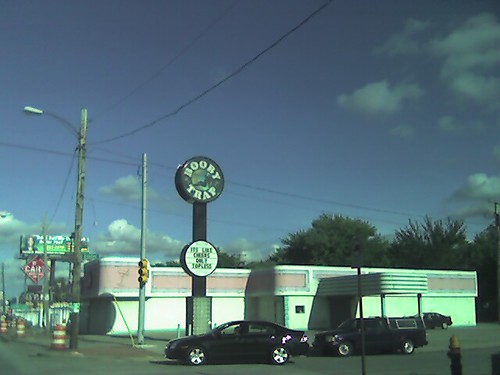
I almost forgot. Kirk Gibson is Rozema's brother in law. Rozema and Gibby married sisters in a double ceremony at Grosse Pointe Memorial Church in Grosse Pointe Farms, Michigan. The legend goes ballplayers met their future brides at an establishment called "The Booby Trap." I'll let your imagination take it from there.

On this date in 1980:
The Cubs-Expos game was suspended due to darkness. If you recall dear readers, Wrigley Field had no lights, so when the game went long and into extra innings it had to be called. The game was restarted on August 8, 1980 with the Cubs winning on a grand slam by Cliff Johnson in the bottom of the 14th inning. In an interesting twist, Johnson wasn't with the Cubs when this game started and was acquired by the Cubs via trade on June 23.
Read More
Posted in (On this date), Detroit Tigers | No comments

Thursday, 27 May 2010

#287 John Lowenstein

Posted on 20:30 by blogger


Who is this player?
John Lowenstein, outfielder, Baltimore Orioles
Perhaps no single statistic or anecdote describes John Lowenstein's 1980 season as what happened on June 19. With Baltimore trailing the Oakland A's by a run in the 7th inning, Lowenstein smacked a game-tying single to right. Lowenstein tried to take second on the throw home, but A’s first baseman Jeff Newman cut the ball off and fired towards second base. The ball bounced off Lowenstein's neck, allowing the go-ahead run to score. Then things got dramatic. Lowenstein stayed down and a stretcher carried him off the field. Amidst stunned silence, Lowenstein sat up abruptly and raised both his fists. The crowd went wild. He wasn't hurt badly and returned to the lineup a week later. John finished the season batting .311 with several clutch performances along the way.

A popular fan-favorite, the lefthanded-hitting Lowenstein is one of the best baseball players to come from the state of Montana. After three years starring as a shortstop at the University of California-Riverside, Lowenstein was a low-round draft selection by the Cleveland Indians in 1968. After a year in the military, he rose through the minor league ranks and was named an American Association All-Star in 1970. When he led the club in batting during Spring Training the following year, he earned his ticket to the major leagues.

A versatile performer, Lowenstein played first, second and third with the Tribe, but was most often used as a designated hitter. In eight seasons with Cleveland, John only appeared in more than 100 games one time (1974) and batted a collective .239. The Indians had difficulty finding Lowenstein a regular place to play; so much so that they traded him to the Toronto Blue Jays in December 1976, only to re-acquire him the following March, without ever appearing in a game as a Blue Jay.

After a one-year stopover in Texas, Baltimore signed Lowenstein in the spring of 1979. The move would rejuvenate his career. Famously platooning with Gary Roenicke, Lowenstein was a significant member of the 1979 AL Champions. His extra-inning, pinch-hit home run won Game 1 of the ALCS as Baltimore would claim the AL East flag. He had another clutch home run in Game 2 of the 1983 World Series, coming at a crucial moment and turning the Series in the O's favor. John batted .385 as Baltimore won the championship in five games. His platoon with Roenicke was so effective that in 1982 the two combined to bat .292 with 45 homers and 140 RBI.

Alternately known as "Steiner" and "Brother Lo" by his teammates, Lowenstein retired early in the 1985 season after 16 big league seasons. When he retired, he was the only man to homer from nine different positions (1B, 2B, 3B, SS, RF, CF, LF, DH and PH), a mark since matched by Rex Hudler. His colorful personality was a natural for television and he spent ten seasons as a commentator for the Orioles. Today, Lowenstein is enjoying retirement in Nevada.

Why I love this card
It reminds me of the summer nights when I used to keep score to games on television. I would be allowed to stay up late and that was always a huge deal. I never took out my cards just in case it was perceived that I was making a mess and everything would be ruined. Therefore, I had no frame of reference and I always spelled Lowenstein or Roenicke wrong. It was inevitable. Happened every time. Even on this post, I triple checked since I am still self-conscious about it. I wish I would have kept those scorecards, though.

Something else....
There are several quotes attributed to Lowenstein over the course of his career, but my favorite has to be one when he was asked for his autograph:
Sorry kid, I left it in the clubhouse.

On this date in 1980:
2000 people in South Korea are killed as part of an uprising against the current government. The Kwangju massacre was to became an important landmark in the struggle for South Korean democracy. It heightened provincial hostility and marked the beginning of the rise of anti-American sentiment in South Korea.
Read More
Posted in (On this date), Baltimore Orioles | No comments

Topps Super Card #25 J.R. Richard

Posted on 11:10 by blogger
I haven't featured a Super Card in a while and I've been meaning to catch up, so here goes....

J.R. Richard was card #50 in the regular issue set and was featured on nearly one year ago on Monday, June 1, 2009.

How sweet is it that it refers to him by his full name on the reverse?

Here is his 1980 Topps Super Card:


Read More
Posted in (Topps Super Cards) | No comments

Wednesday, 26 May 2010

#286 Darold Knowles

Posted on 18:52 by blogger


Who is this player?
Darold Knowles, relief pitcher, St. Louis Cardinals
After making the final cut in Spring Training, the 38-year old veteran Darold Knowles was hoping to get another season out of his well-used left arm. In only his second appearance, Knowles was treated rudely by the Pittsburgh Pirates, giving up a home run and a double and losing the game 12-10. Shortly thereafter, he was let go by the St. Louis Cardinals. Knowles did not appear in another game in 1980, and finished his 16-year career holding the record for most lifetime appearances by a lefthanded pitcher (765).

Best known for his time as one of Oakland's "Moustache Gang" of the 1970s, Darold Knowles was initially product of the University of Missouri. The Baltimore Orioles selected him as an amateur free agent in 1961 and he was a highly regarded prospect when he pitched a no-hitter in 1962 won 16 games with Elmira in the Eastern League the following year. After a brief appearance with the Orioles in 1965, Darold was traded to the Philadelphia Phillies. He spent only one year with the Phillies, finishing third in the National League in appearances and seventh in saves.

Traded to the Washington Senators in 1967, he was consistently one of the most durable and reliable pitchers in the baseball. Except for one year spent in the Air Force, Darold was consistently among the league leaders in appearances and saves. This workload earned him All Star recognition in 1969. Pitching in front of his hometown fans, Knowles worked the American League out of a jam in the third inning. He saved 64 games in a Washington uniform and posted a 2.46 ERA over his six seasons there.

When he was traded to the Oakland A's during the 1971 season it would prove to be the most successful run of Knowles' career. As setup man to Rollie Fingers, Knowles had an indispensable role with the A's as they won the World Series three consecutive years. Although he missed the 1972 season with a finger injury, he appeared in all seven games of the 1973 Classic, notching two saves and not allowing a run. No other pitcher before or since has replicated the feat of appearing in every game of a seven game set.

After his years in Oakland, Knowles became a journeyman, with stops with the Chicago Cubs, Montreal and finally in St. Louis. Like most players of his era, Knowles went into coaching when his career ended, with the Cardinals and the Philadelphia Phillies at the major league level. Most recently he was a pitching coach with the Dunedin Blue Jays. He also has a Facebook account with a friends ranging from George Brett to Casey Blake.

Why I love this card
The cartoon on the back was the first I had ever heard of Knowles' World Series feat. However, it always left me with the impression that Knowles didn't do as well as he did. Must be the squiggly arms and legs. Or the pained expression. Or maybe the really huge star.

Something else.....
Knowles' card is a DP variety, and it figures since I have four of these, but only one Don Baylor. We've also had a bit of a run lately of guys in their last season or last card. With Knowles, that makes five out of the last eight. I wonder if Topps knew something the rest of us didn't?

On this date in 1980:
The #1 song in the country on this date is "Funkytown" by Lipps, Inc. I'm having shivers just typing that.
Read More
Posted in (DP Cards), (Last Card), (Last Season), (On this date), St. Louis Cardinals | No comments

Tuesday, 25 May 2010

#285 Don Baylor

Posted on 18:53 by blogger


Who is this player?
Don Baylor, outfielder/DH, California Angels
The reigning American League MVP, Don Baylor had a frustrating season in 1980. Mirroring the fate of his team, Baylor broke a wrist in May and missed six weeks of action. When he returned, the Angels were mired in a deep losing streak and were in last place. Baylor likely pressed to turn things around and was unable to repeat the offensive heroics of 1979. His season came to an end when he was injured a second time, dislocating his toe in early September. Baylor finished the year batting .250 and managed only five home runs and 51 RBI.

Don Baylor's path to the major leagues was unique. He was one of the first students to integrate both his junior and senior high school in Texas during the early 1960s. He voluntarily crossed a wide racial barrier, not an easy task then, and the prejudices of the time were a consistent obstacle. The young Baylor was an outstanding athlete and he learned the resolve to accept and face a challenge. It was a quality that would serve him well as he worked his way towards a major league dream. He was recruited to play football at Texas, but Baylor's passion was baseball and he was selected number two by the Baltimore Orioles in the 1967 free agent draft.

In Baltimore, Baylor found a mentor and friend in Hall of Famer Frank Robinson. Baylor closely observed and emulated Robinson's style of play and leadership. The Orioles were a perennial contender and had a deep farm system, so despite being named Minor League Player of the Year in 1970, Baylor had difficulty finding playing time. He made the big leagues for good in 1972 and stayed in the Oriole lineup for five years, showing an impressive combination of power and speed. Although it looked as if he would be an Oriole for some time, he was part of a multi-player package to the Oakland A's for Reggie Jackson.

After a year in Oakland, Baylor was one of the first free agents and signed an eye-popping contract with the California Angels before the 1977 season. Despite early struggles, Baylor had a career year in 1979, leading the Angels to their first postseason appearance. In being named the AL MVP, Don hit 36 home runs and led the league in runs, games played and RBI. Baylor would spend six seasons in Anaheim, and when he left after the 1982 season, he was the franchise leader in several categories.

He went to the New York Yankees in 1983 and then to the Boston Red Sox in 1986. In the last three years of his 19-year career, Baylor appeared in the World Series each year, each time with a different team (Boston, Minnesota, and then Oakland). He retired after the 1988 season and began a second career as a coach. He finished his playing career as the all-time leader in being hit by a pitch (267) a record now held by Craig Biggio.

Baylor was the first manager of the Colorado Rockies in 1993 and was only the fifth black to manage a major league club. He led the Rockies to the postseason in 1995 and was named NL Manager of the Year. By 1997, the Rockies under Baylor's leadership had the best five-year record (363-384) of any expansion club in MLB history. He managed the Chicago Cubs in the early 2000s and returned to Colorado in 2009 where today serves as the club's hitting coach.

Why I love this card
Actually, this card irritated me for a long time. Baylor started the 1979 All Star Game in Seattle when Rod Carew was injured and Carl Yaztremski shifted over to first base. Baylor was the MVP and had another card in this set to recognize his RBIs. I know that it was Topps' practice to designate as All-Stars the guys who won the voting, but I always felt Baylor got rooked. Now, inspired by recent posts regarding customized cards, here is my attempt to recognize Baylor:


Something else....
Baylor also had a 1980 Super Card. Here it is below. I remember my original one getting ruined with a Slurpee at some point.


On this date in 1980:
Scott Hairston, currently with the San Diego Padres and son of former major leaguer Jerry Hairston is born.
Read More
Posted in (On this date), California Angels | No comments

Monday, 24 May 2010

#284 Larry Murray

Posted on 17:33 by blogger


Who is this player?
Larry Murray, outfielder, Oakland A's
While not known at the time, the six-year major league career of Larry Murray was already at an end. In Spring Training Larry was designated for assignment and spent the season with the Triple-A Ogden A's. Murray appeared in only 13 games that season batting only .233 with one home run and three RBI.

A phenominal three-sport athlete at Phillips High School in Chicago, Murray chose baseball after a high school career in which he broke and established numerous records as a standout running back/defensive back. He was taken in the 5th round of the 1971 draft by the New York Yankees, and spent the next six seasons in the minor leagues. Murray displayed impressive speed and a strong throwing arm, but his hitting was suspect. He failed to bat over .300 during that span in the bushes, but did earn three brief looks by the Yankees during 1974-76. He played in a handful of games each year and managed only four hits.

Nicknamed "Slick," Murray had his finest minor league season in 1976, leading the Eastern League in runs and being named an All-Star. He was assigned to Triple-A Syracuse in 1977 before he was involved in a multi-player deal with the Oakland A's. The trade would be the biggest break in Murray's career. As the A's fell from the perch of perennial contender in the wake of free agency, Murray earned regular playing time. He appeared in 90 games with the 1977 A's, but only batted .179.

Murray spent most of the 1978 season in the minors, but returned to the A's in 1979. He began the year as Oakland's right fielder, but eventually lost the job to Tony Armas. He also saw his playing time diminish thanks to a talented rookie named Rickey Henderson. Larry struggled at the plate all summer, finishing the year batting .186. Even his greatest asset, his speed faltered as he was cuaght 50% of the time. He attempted a comeback with the A's in Spring Training 1981 but was cut and his career was formally over.

Currently, Larry lives in California and was quoted in the Chicago Defender recently upon the passing of his high school coach, Carl Bonner. During his 42-year career as a coach/physical education teacher at Wendell Phillips High School, Bonner became one of the winningest coaches in Illinois history, winning more than 200 games. He also played a pivotal role in sending thousands of underprivileged student-athletes to college and beyond. Said Murray:
“He was one of the greatest men I knew. He helped shape us into who we turned out to be as men. It wasn't just football. He was like our father when our fathers weren’t there. We were a gang-infested school back then.”


Why I love this card
The minor league records occassionally listed on the back would always interest me. I would always ask my Dad where certain cities were when it wasn't obvious. I had an atlas and would look first. It may not have been Murray's card, but I do recall almost stumping him on Oneonta. I sat on the porch while he finished cutting the front lawn. When he was done he just looked at me and said "New York." Back to the drawing board....

Something else....
Murray finished his career with 20 stolen bases in 30 attempts. His 20 steals were the most by a post-Deadball Era player with a career average under .200. Murray is also featured in the recent book "Mendoza's Heroes" by Al Pepper.

On this date in 1980:
The New York Islanders defeated the Philadelphia Flyers in overtime of Game 6 of the Stanley Cup finals. It was the first Cup win for the Isles who would go on to create a dynasty and win four in a row. The game winner can be viewed here.
Read More
Posted in (DP Cards), (Last Card), (On this date), (Rookie Card), Oakland A's | No comments

A New Blog

Posted on 02:32 by blogger


We interrupt our regularly scheduled program to bring you this bulletin. This weekend, my son made a significant dent in his current passion, the 2010 Topps Opening Day set. We came across our favorite vendor who sells my son the current cards for a nickel a piece. He told us that my son is the only child that he sells to so he lowers the price to keep him coming back. He does.

This morning, Christian announced that he would like to start a blog as well. Therefore, I bring you his entry: 2010 Topps Opening Day Cards. Currently featured is card #1, Prince Fielder.

In a shameless plug on my part, I would like to invite all of you to join his blog and comment when you can. We all know how good it feels to see a comment or someone join, multiply that by five and you will have my son's reaction.

He is unoffically the youngest baseball card blogger out there right now (I like to think) and a tremendous baseball fan. He will be checking in as his time (and interest) allows and I suspect there will be more than just 2010 cards and issues discussed.

His father living in the 1980 past will certainly appreciate it.

We now return you to our regularly scheduled frog, er blog.
Read More
Posted in (Card Show Finds) | No comments

Sunday, 23 May 2010

#283 John Ellis

Posted on 10:35 by blogger


Who is this player?
John Ellis, utility, Texas Rangers
Although he started at first base for the Texas Rangers on Opening Day, John Ellis spent much of the 1980 season in a reserve capacity. When he found his way into the starting lineup, the righthanded hitting Ellis usually faced lefthanded pitching. His only home run came against Kansas City Royals' ace Larry Gura, and he had a three-hit, two RBI performance against the Oakland Athletics. A strange moment occurred in early June when Ellis and several Rangers teammates were involved in a melee with Chicago White Sox fans outside of Comiskey Park. An unrelated bone bruise put him on the disabled list and he missed three weeks of action.

While he once claimed that he grew up in a pool hall, John Ellis was a standout football and baseball player at New London High School in Connecticut. A solid 215 pounds, he was drafted by the New York Yankees in 1966 as a catcher. After hitting .333 at Triple A Syracuse, the Yankees called him up in 1969. Despite hitting nearly .500 in Spring Training 1970, Ellis' path was blocked by another Yankee catching prospect, Thurman Munson, who won Rookie of the Year honors that year. Ellis settled in as Munson's apprentice, occasionally playing first base. He performed well enough to earn a spot on the Topps 1971 All-Rookie team.

Ellis' career was also interrupted several different times due to injuries. He was traded to the Cleveland Indians in 1973 in a deal that brought Graig Nettles to New York. John spent two seasons as a regular player, thanks primarily to a rule change. John was the first designated hitter in Indians' history and it allowed him to get more time in the lineup. Unfortunately, he had disputes with Indians manager Frank Robinson and he was traded to the Texas Rangers for 1976. Ellis spent six years in Arlington, playing a variety of positions until his 13-year career came to an end in 1981. He earned a reputation as a hard-nosed player with a knack for coming through in the clutch.

Ellis joined the Spalding Sporting Goods Advisory Staff in the mid-1970s, and had a signature catcher's mitt sold in sporting goods stores. He also had his real estate licence and opened a real estate business. Today, he serves on the board of the Connecticut Sports Foundation Against Cancer, an organization he helped found in 1987. Ellis has lost his brother, sister, and sister-in-law to cancer all before the age of 40, and he also is a cancer survivor.

Why I love this card
I didn't know anything about John Ellis when I got this card. At the time, just a mere glance in searching for the stars of the day. If anything, I was more intrigued about what the structures were on the other side of the left-field wall.

Something else....
In 1975, Ellis had an excellent opportunity to score the one-millionth run in baseball history. Moments before Bob Watson accomplished the feat, Ellis was on third with slugger Boog Powell at the plate in a game against the Baltimore Orioles. Powell struck out, leaving Ellis stranded at third.

On this date in 1980:
In keeping with the movie themes this week, "The Shining" was released on this date. I didn't know anything about Jack Nicholson at the time, but this image scared the devil out of my sister and I for probably two years. I'm over it now. Kinda.

Read More
Posted in (On this date), Texas Rangers | No comments

Saturday, 22 May 2010

If they had this when I was a kid......

Posted on 15:59 by blogger
OK, last mention of "The Empire Strikes Back." Really.

Today was a pretty awesome day. Overnight camping trip that ended this morning, little league baseball pictures, followed by a card show. Stumbled across this on the net earlier, a giveaway from last night's Dodgers-Tigers game:


Apparently, the Dodgers recognized the 30th anniversary with "Empire Strikes Back Night." Obi-Wan from "The Clone Wars" sang the National Anthem, Chewbacca threw out the first pitch.

Are you kidding me? How great is this? What I would have done to have baseball combined with Empire back in 1980. It would not have gotten any better.

My son and I watched Empire today, he for the first time. At the climatic scene, I watched him instead of the movie. Watching his eyes grow wide at the "I am your father" line and his incredulous look at me was priceless. It will be a memory I will have for the rest of my life.

On a related note, another 1980s icon is celebrating a 30th anniversary today.


Released in Japan, Pac-Man would rule the world. But that's another post for another day.
Read More
Posted in (Empire Strikes Back) | No comments

Friday, 21 May 2010

#282 Darrell Johnson Seattle Mariners Team Card

Posted on 10:26 by blogger


As the Seattle Mariners prepared to set sail for the fourth season in their existence, 1980 began with the club filing a lawsuit against King County, owners of their home park, The Kingdome. Specifically, the Mariners were suing for breach of contract and for failing to cooperate with the ballclub. The Mariners were led to believe that their domed stadium would be similar to the Houston Astrodome and built its club around pitching and defense. Instead, the outfield walls were contructed 30 feet closer than original plans and did not allow the Mariners to improve as quickly as they should have, leading to a decline in attendance.

Regardless, the 1980 edition of the Seattle Mariners were not an impressive bunch. They were regarded to have an impressive group of pitching prospects, but during the offseason, they traded one of the most popular and productive players, Ruppert Jones, to the Yankees for a package of prospects to address their depth. Most preseason publications picked the Mariners for fifth place, maybe higher should the pitching come together. Seattle did well the first month of the season, winning one more game than they lost and at the end of May, were in fourth place with a 23-24 record.

Things went downhill from there. The Mariners went 24-58 over the summer months and the frustration began to set in. Attendance had dropped off significantly and the Mariners drew just 836,000 fans. Injuries began to mount and there were rumors of an impending sale of the club. For a city who already lost one major league club, there was a fear that the team would relocate to another city. In the middle of all of this, the Mariners fired their manager Darrell Johnson, and replaced him with Maury Wills, just the third black man to manage in the Major Leagues.

Wills promised a rise to repectibility and an emphasis on fundamentals. They had a franchise-best six game winning streak in September, but finished the year losing eight in a row. Their 59-103 record was worst in baseball. Pitcher Rick Honeycutt was their only All-Star, starting the season 7-1 before faltering. Fan favorites Bruce Bochte hit .300 and Julio Cruz was fourth in the AL in stolen bases. Mike Parrot had an interesting season, winning one game and losing 16, all of them in a row. When the season ended, the Mariners traded Honeycutt in a multi-player trade that landed Seattle slugger Richie Zisk.

Why I love this card
The exterior shot of the Kingdome. Not many of the teams did that (if at all) on team cards so to have an outdoor shot was fairly unique, even if it did look like freeway on-ramps.

Something else....
Longtime Pittsburgh Pirate and Hall of Famer Bill Mazeroski was the third base coach for the Mariners in 1980. I try and I try, but I cannot envision "Maz" wearing the Mariner pitchfork.

On this date in 1980:
Apparently, I was wrong about the release of "The Empire Strikes Back" as it was released on May 21st and not May 20th. Either way, it's worth another mention in my mind. Here is the original trailer.
Read More
Posted in (On this date), (Team Card), Seattle Mariners | No comments
Newer Posts Home
Subscribe to: Posts (Atom)

Popular Posts

  • #348 Checklist #3
    What is this card? Checklist #3, cards #243 to #363 This checklist marks the halfway point of the 1980 set, card #363. I realize that there ...
  • #297 Tim Johnson
    Who is this player? Tim Johnson, infielder, Toronto Blue Jays After putting the finishing touches on a seven-year career as a major league i...
  • #357 Bob McClure
    Who is this player? Bob McClure, relief pitcher, Milwaukee Brewers It is difficult to imagine now, but in 1980, when Bob McClure was was the...
  • #324 Tom Underwood
    Who is this player? Tom Underwood, starting pitcher, Toronto Blue Jays When this card was being pulled from packs during the 1980 season, To...
  • #359 Randy Moffitt
    Who is this player? Randy Moffitt, relief pitcher, San Francisco Giants After spending most of the 1970s as one of the San Francisco Giants...
  • #356 Jerry Coleman San Diego Padres Team Card
    What is this card? Team Card, San Diego Padres, Jerry Coleman Manager Certainly, whenever a team announces a new manager, there is excitemen...
  • #305 Randy Jones
    Who is this player? Randy Jones, starting pitcher, San Diego Padres On the morning of May 16, 1980 things were looking up for Randy Jones of...
  • #323 Mick Kelleher
    Who is this player? Mick Kelleher, utility infielder, Chicago Cubs The current first base coach of the New York Yankees, in 1980 Mick Kelleh...
  • #360 Darrell Porter
    Who is this player? Darrell Porter, catcher, Kansas City Royals After posting one of the best offensive seasons by a catcher up to that poi...
  • #353 Andy Hassler
    Who is this player? Andy Hassler, relief pitcher, New York Mets When Spring Training began in February 1980, it was presumed that free agent...

Categories

  • (1980 All Star Game)
  • (1980 Topps Burger King)
  • (All Star Card)
  • (Card Show Finds)
  • (Checklist)
  • (Dad)
  • (Deceased)
  • (DP Cards)
  • (Empire Strikes Back)
  • (Hall of Fame)
  • (Last Card)
  • (Last Season)
  • (On this date)
  • (Rookie Card)
  • (Team Card)
  • (The Third 100 Cards)
  • (Topps Super Cards)
  • 1980 Topps Team #11
  • 1980 Topps Team #12
  • 2009 Father's Day
  • Atlanta Braves
  • Baltimore Orioles
  • Boston Red Sox
  • California Angels
  • Chicago Cubs
  • Chicago White Sox
  • Cincinnati Reds
  • Cleveland Indians
  • Detroit Tigers
  • Houston Astros
  • Kansas City Royals
  • Los Angeles Dodgers
  • Milwaukee Brewers
  • Minnesota Twins
  • Montreal Expos
  • New York Mets
  • New York Yankees
  • Oakland A's
  • Philadelphia Phillies
  • Pittsburgh Pirates
  • San Diego Padres
  • San Francisco Giants
  • Seattle Mariners
  • St. Louis Cardinals
  • Texas Rangers
  • Toronto Blue Jays

Blog Archive

  • ►  2012 (24)
    • ►  June (2)
    • ►  May (16)
    • ►  April (6)
  • ►  2011 (25)
    • ►  July (14)
    • ►  June (11)
  • ▼  2010 (51)
    • ►  August (5)
    • ►  July (2)
    • ►  June (30)
    • ▼  May (14)
      • #291 Randy Scarbery
      • #290 Steve Garvey
      • Topps Super Card #50 Amos Otis
      • #289 Bruce Bochy
      • #288 Dave Rozema
      • #287 John Lowenstein
      • Topps Super Card #25 J.R. Richard
      • #286 Darold Knowles
      • #285 Don Baylor
      • #284 Larry Murray
      • A New Blog
      • #283 John Ellis
      • If they had this when I was a kid......
      • #282 Darrell Johnson Seattle Mariners Team Card
Powered by Blogger.

About Me

blogger
View my complete profile